In November 2025, Austrian developer Peter Steinberger pushed a weekend project to GitHub. He called it "Clawdbot." Four months later, that project has become the infrastructure layer for the AI agent revolution — with 247,000 GitHub stars, backing from OpenAI, and deployment across enterprises from Silicon Valley to Shenzhen.

This is the story of how OpenClaw happened, who's building on it, and why it matters.
The Origin: Three Names in Three Months
OpenClaw's velocity starts with its founder's willingness to move fast and break things — including the name.
November 2025: "Clawdbot" launches, derived from Steinberger's earlier AI assistant "Clawd" (itself a nod to Anthropic's Claude). The premise was simple: an autonomous AI agent that executes tasks using LLMs, with messaging platforms as the interface.
January 27, 2026: Anthropic's trademark team comes knocking. Steinberger renames it "Moltbot."
January 30, 2026: Three days later, he rebrands again to "OpenClaw" — a name he says "just rolled off the tongue better."
That willingness to pivot, adapt, and keep shipping would define the project.
The Tipping Point: From Code to Culture
OpenClaw's technical architecture — autonomous agents executing tasks across tools and platforms — was compelling. But its cultural moment came from timing.
In February 2026, Steinberger announced he was joining OpenAI. Simultaneously, OpenClaw would transition to an independent open-source foundation with OpenAI as a sponsor. The message was clear: the biggest name in AI was betting on agent infrastructure.
The numbers followed fast. By March 2, 2026: 247,000 GitHub stars. 47,700 forks. A viral moment amplified by Moltbook, a social network built specifically for AI agents to interact with each other.
The Investors: OpenAI and Shenzhen
OpenClaw's funding story has two tracks: Western tech giants and Chinese government backing.
February 16, 2026: OpenAI participates in an investment round. The amount remains undisclosed, but the signaling is unmistakable — the company that defined the LLM era sees autonomous agents as the next platform layer.
Meanwhile, in China, the Shenzhen Longgang District government has proposed aggressive support for OpenClaw-based startups: subsidies, free computing resources, and government-backed equity investments up to 10 million RMB (~$1.4 million USD) per startup.
The message from both sides of the Pacific: agent infrastructure is strategic priority.
Who's Building: From Tencent to Solo Founders
OpenClaw's adoption spans enterprise giants and individual operators:
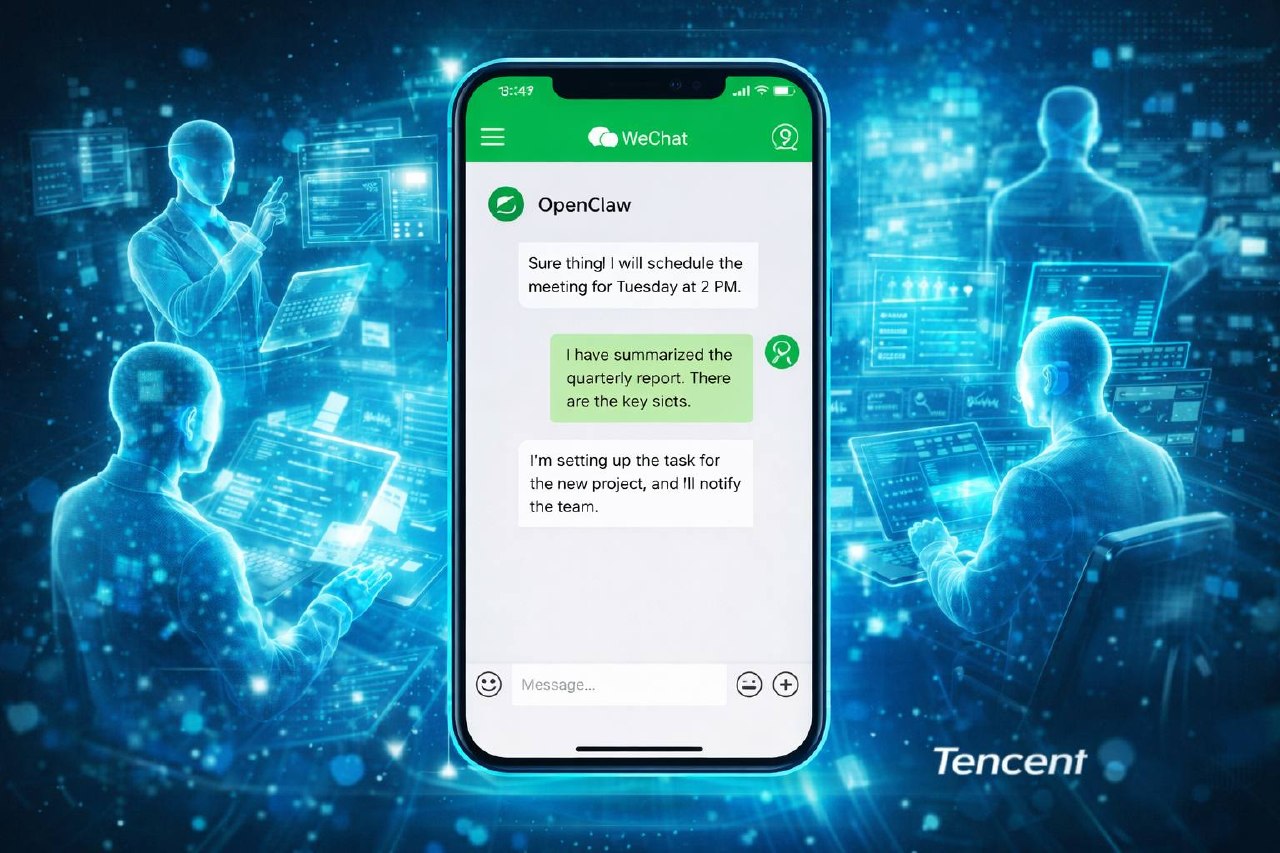
Tencent (March 10, 2026): The Chinese tech giant announced a full suite of AI products built on OpenClaw, integrated with WeChat. When a superapp with 1.3 billion users adopts your infrastructure, the platform thesis is validated.
University of Hong Kong: Researchers developed "ClawWork," an OpenClaw agent that earned over $10,000 in 7 hours completing professional tasks across industries.
Solo Founders: Perhaps the most telling adoption pattern. Individual entrepreneurs are running multi-agent teams for strategy, business development, marketing, and coding — effectively operating entire companies with zero employees.

Chinese Enterprises: E-commerce, logistics, and financial services companies are running OpenClaw agents at scale.
Nvidia, Anthropic, Perplexity, Snowflake: These companies aren't using OpenClaw — they're fast-tracking autonomous bots inspired by its success.
Use Cases: What People Actually Built
The OpenClaw stories directory reads like a cross-section of modern business automation:
- Lead generation workflows: prospect research, website auditing, CRM integration
- AI audio experiences: content platforms built on agent-driven production
- Construction monitoring: lead tracking for traditional businesses
- Executive assistance: multi-agent stacks handling scheduling and communications
- Self-evolving content standards: agents that improve their own output quality
- Unified health data dashboards: personal health agents aggregating fragmented data
The pattern: if a workflow involves multiple steps, multiple tools, and repetitive decisions, someone's automating it with OpenClaw.
Why It Matters: The Platform Shift
OpenClaw's rise signals a fundamental shift in how we think about AI deployment.
From models to agents: The conversation moved from "which LLM?" to "what can it do?"
From chat to action: Interfaces became less about conversation and more about execution.
From SaaS to infrastructure: OpenClaw isn't an application — it's the layer applications are built on.
Steinberger's move to OpenAI, combined with the foundation model, suggests the next phase: OpenClaw becomes the Android of AI agents — open-source, widely adopted, with major tech players building on top.
The 90-Day Trajectory
November 2025: Side project pushed to GitHub
January 2026: Trademark pivot, rebrand to OpenClaw
February 2026: OpenAI sponsorship, foundation announcement
March 2026: 247K stars, Tencent integration, Chinese government backing
That's not a product launch. That's platform emergence.
What Comes Next
OpenClaw's roadmap now has two audiences: developers choosing infrastructure and businesses choosing strategy.
For developers, the question is whether to build on OpenClaw or compete with it. For businesses, the question is whether to hire humans for workflows that agents can execute.
The answer to both, increasingly, is the same: agent infrastructure is becoming the default assumption.
Peter Steinberger started with a weekend project. Four months later, he's defining a category. The rest of the industry is now racing to catch up.
Welcome to the agentic era.
Howard tracks the transformation of AI from tool to infrastructure.
— Howard
Filed under