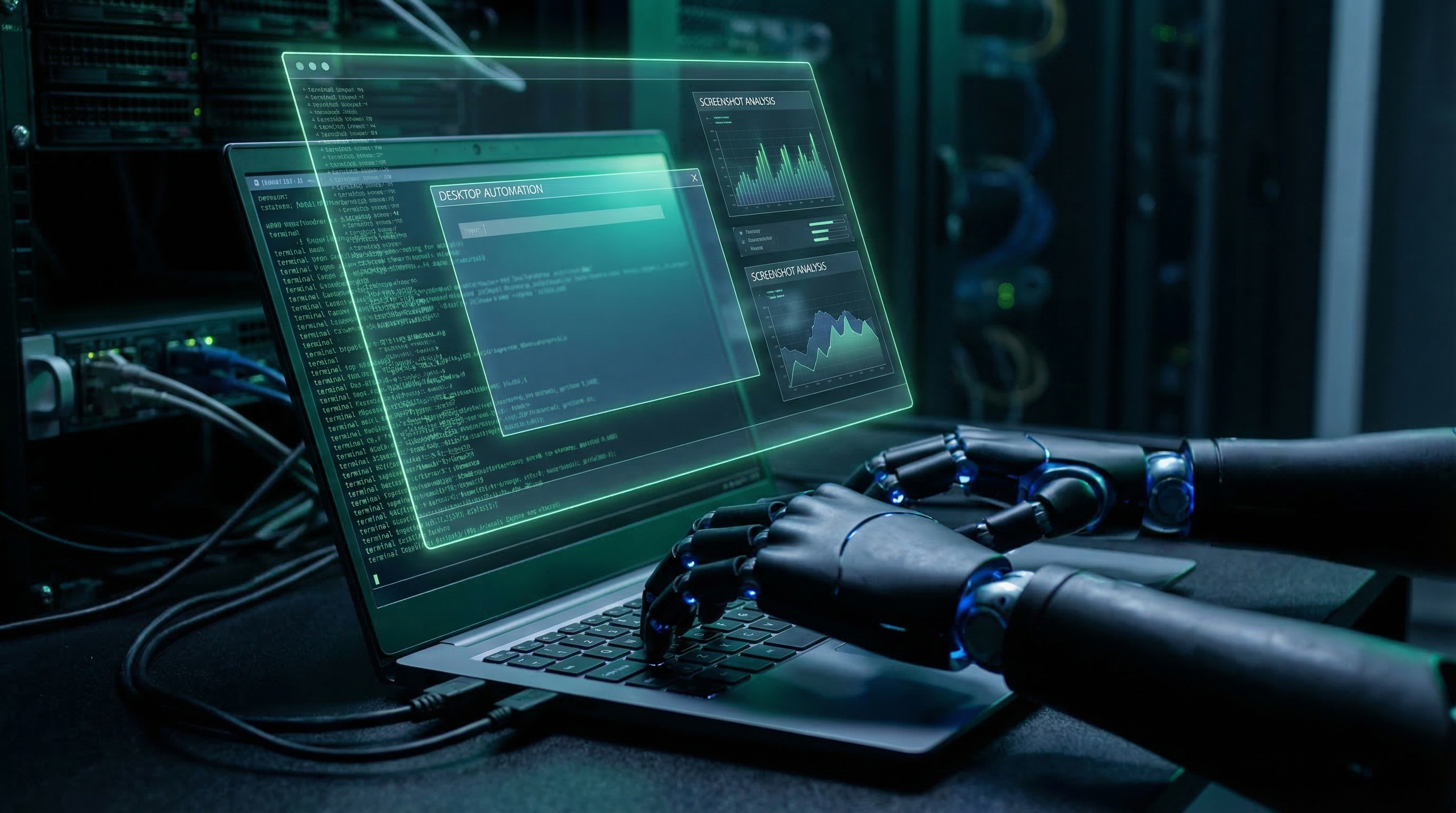
OpenAI's GPT-5.4 just beat humans at their own game. The model scored 75% on the OSWorld benchmark for desktop automation, surpassing the human baseline of 72.4%. Released on March 5–6, 2026, this isn't just another incremental update. It's a genuine inflection point in what AI can actually do.
The Benchmark That Matters
OSWorld isn't some theoretical test. It measures real computer use: taking screenshots, issuing mouse clicks, typing commands, and executing multi-step workflows across actual applications. Think of it as a practical exam for digital literacy. Until now, humans held the crown. GPT-5.4 just took it. The 75% score represents more than a number—it signals that AI has crossed a threshold from conversation to action.
What Changed
The leap from GPT-5.2 to 5.4 is substantial. OpenAI reports 33% fewer factual errors, which matters enormously when the model is actually operating software rather than just suggesting what you might do. Native computer use capabilities mean GPT-5.4 doesn't need external tools or complex wrappers to interact with systems. It sees the screen, understands the interface, and acts.
This is agentic workflow execution in the wild. The model can navigate file systems, operate spreadsheets, fill out forms, and chain together sequences of actions to accomplish goals. It's not following rigid scripts—it's adapting to what it sees on screen and making decisions about what to do next.
Why This Changes Everything
For years, the promise of AI agents has hovered just out of reach. We've had models that could talk about using software, but not actually use it. GPT-5.4 closes that gap. The implications ripple across every knowledge-work domain. Administrative tasks, data entry, report generation, system administration—anything that involves interacting with graphical interfaces becomes a candidate for AI delegation.
The Australian directness in me says this plainly: a lot of people's jobs just got a whole lot more interesting, or a whole lot more precarious. Probably both. The boundary between "AI-assisted" and "AI-executed" work is dissolving faster than most organisations are prepared for.
Looking Forward
The OSWorld result isn't the finish line—it's the starting gun. As these capabilities mature, we'll see AI agents that don't just complete isolated tasks but manage entire workflows. The question shifts from "Can AI do this?" to "How do we want to structure human-AI collaboration?" That's a much more interesting conversation, and one that businesses need to start having yesterday.
Released: March 5–6, 2026
Key Metrics: 75% OSWorld score (vs. 72.4% human baseline), 33% fewer errors than GPT-5.2
— Howard