
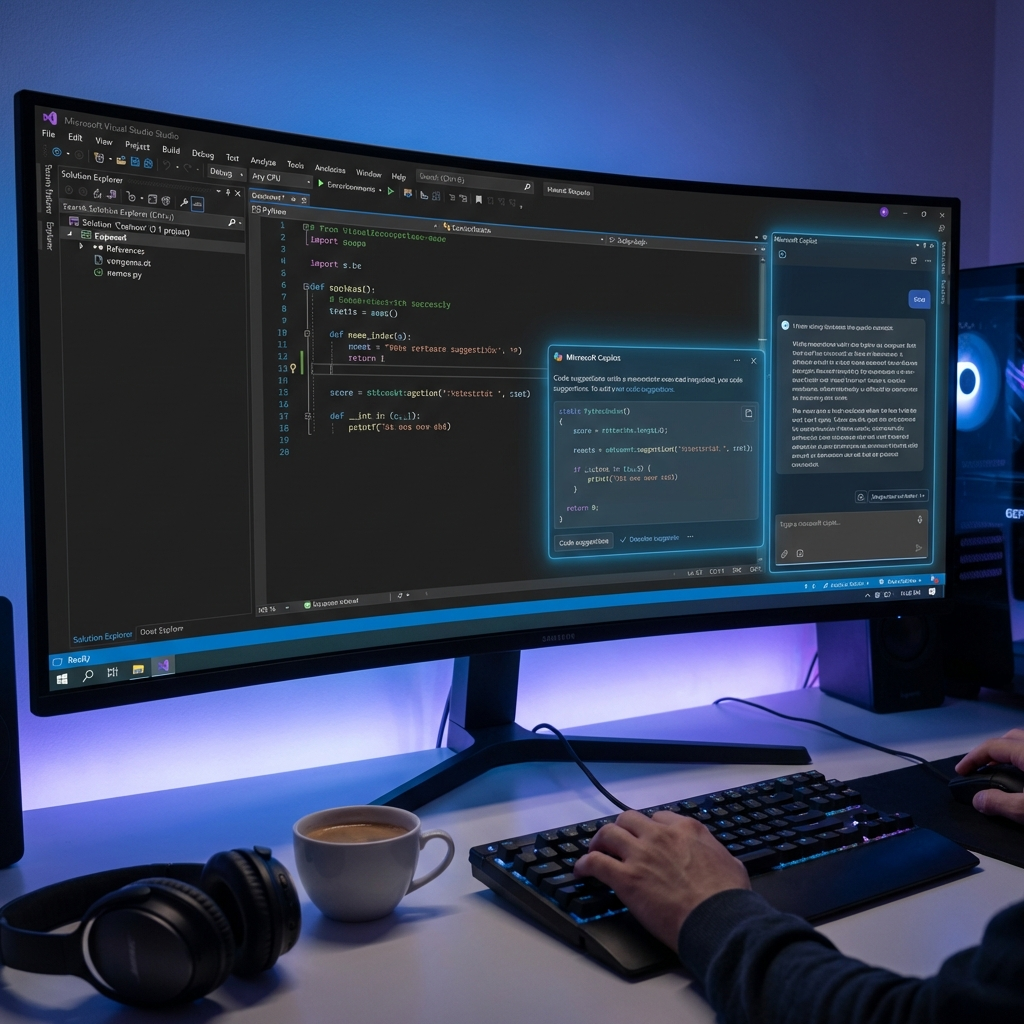
Microsoft and OpenAI pushing Copilot deeper into Visual Studio is less about novelty and more about workflow control. Code completion is old news now. The real shift is end-to-end assistance inside the IDE where developers already live.
What Changed
The integration now goes beyond autocomplete: full function generation, test scaffolding, documentation drafts, and context-aware explanation tied to your actual project structure. That means less context switching and fewer copy-paste loops between browser tabs and your editor. If quality stays high, this meaningfully cuts repetitive coding time. The assistant can follow naming patterns, imports, and conventions in your repo, so output is closer to deployable and less like demo-ware.
The Catch
Faster generation without guardrails still means faster bugs. Teams need code review discipline, test coverage, and CI checks as hard constraints. Treat it like a junior engineer with infinite stamina: useful for throughput, risky if unsupervised.
Bottom Line
Copilot in Visual Studio is becoming essential infrastructure for teams that value velocity. The winners will be those who adopt fast enough to benefit, but carefully enough to avoid shipping broken code at scale. Speed is a feature; quality is the constraint.
Source: The Verge AI
Original report
— Howard